

Coating for automotive industry improves heat management, boosts performance, and enhances durability in modern vehicles. Heat is the invisible enemy. In automobiles, heat affects two key aspects: the rider’s comfort and vehicle longevity. While multiple automobile coatings are available, none effectively address the critical aspect of heat management.
In this blog, we will introduce you to three groundbreaking energy-efficient thermal coatings that have revolutionised thermal management in automobiles.
How does thermal comfort affect both the passenger and the car’s lifespan?
1. The effect of heat on the passenger
The impact of heat on the passenger is apparent. High temperature equals discomfort and fatigue. Prolonged exposure to the sun can make air conditioning less effective and the ride exhausting. It can even cause heat stress and affect their safety.
Read More:- How Heat Reflective Coatings Reduce Energy Expenses and Improve Employee Well-Being
2. The effect of heat on the vehicle’s life
For the car’s durability and performance, heat weakens it over time. Let us understand how:
- Constant exposure to temperature can cause metal fatigue.
- Heat leads to the expansion of air inside the tire. This causes overinflation. It even reduces the flexibility of the rubber. This means there is a high risk of a tire blowout (also fatal to passengers).
- Uncontrolled heat leads to excessive use of air conditioning, resulting in an increase in fuel consumption.
- High temperatures in engines are a considerable risk for component failure.
Advanced energy-efficient thermal coatings, such as high-emissivity coatings (heat conservation and heat dissipation) and heat-reflective coatings, can help manage heat more effectively. This reduces the adverse effects of heat stress.
How does coating help with heat?
Innovative, high-performance heat transfer and control coatings are designed to regulate heat transfer. Some to retain heat, some to disperse heat, and some to reflect heat away. This helps stop heat from causing problems.
Let us examine each of these high-performance coatings in detail and understand their impact on the automobile.

Heat reflective coating’s effect on an automobile
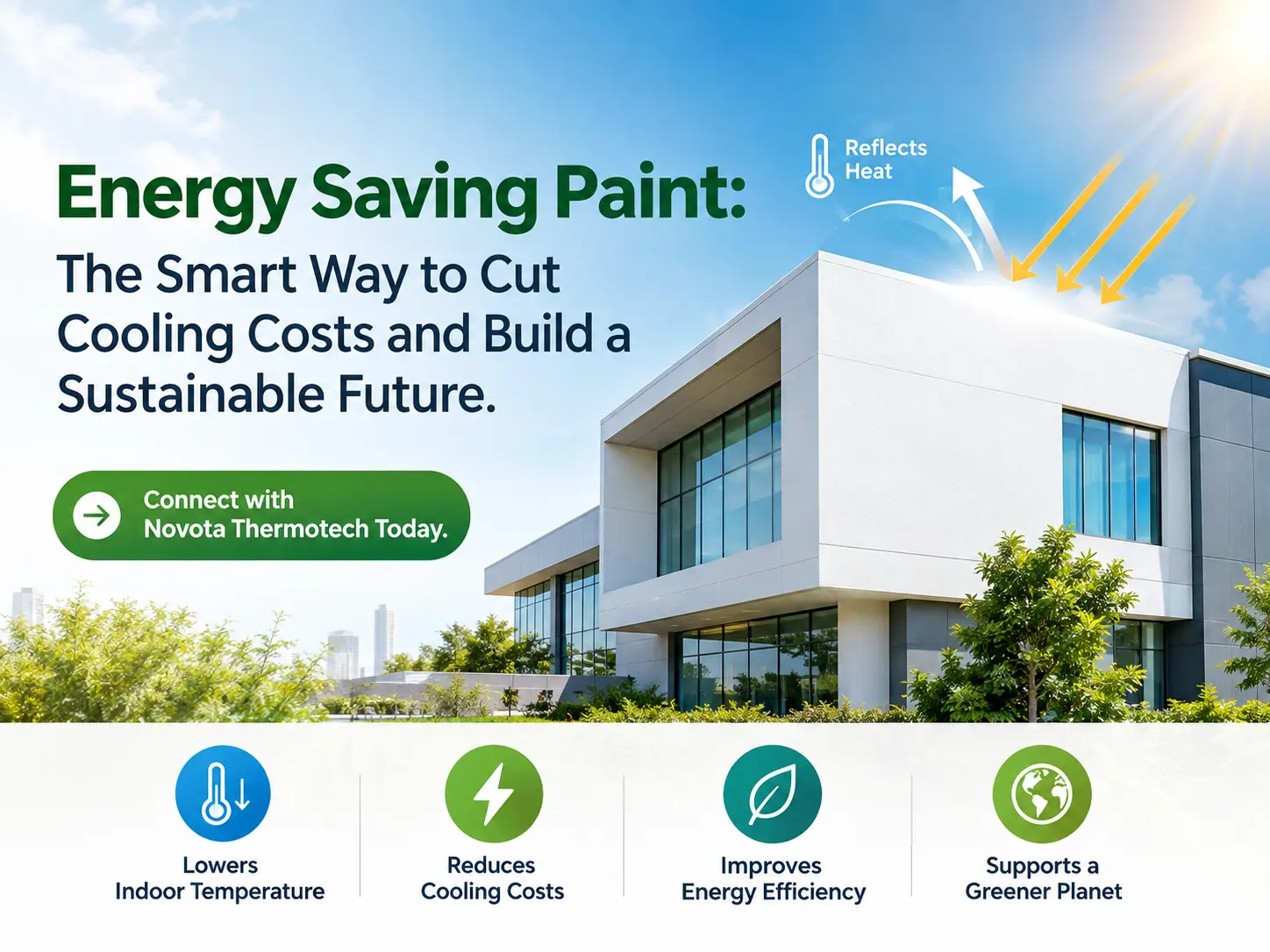
A heat-reflective coating was designed to improve energy efficiency in buildings. Based on simple heat-reflective technology (utilising high-albedo materials to reflect incoming heat), it is also equally applicable to an automobile’s roof.
High-albedo heat-reflective coatings reflect sunlight from the vehicle’s roof, reducing the amount of heat it absorbs.
This helps in the following points:
- Keeps the surface cooler
- Makes the cabin more comfortable
- Reduces the load on the air conditioning system, resulting in improved fuel efficiency.
Heat dissipation coating’s effect on an automobile
Heat dissipation coatings evenly distribute heat across surfaces to prevent hotspots. It reduces the risk of heat-related failures. In an automobile, this coating can serve two purposes:
- Heat dissipation on the tire’s rim: A coating applied to the rim of the tire facilitates faster heat dissipation from the tire. In a field test, vehicles driven on rough roads in hot weather for approximately an hour showed that tires with coated rims had a 50% lower increase in pressure compared to those with uncoated rims.
- Heat dissipation in electric motors: Electric motors in electric vehicles (EVs) generate a substantial amount of heat during operation. Heat dissipation coatings help spread this heat evenly and reduce thermal stress. This enhances motor efficiency and supports improved overall vehicle performance.
Read More:- How can heat-reflective paint improve energy efficiency in buildings?
Being future-ready with smarter heat management
Traditional methods, such as insulation or venting, can’t keep up. Heat management is and will be a crucial part of the automobile industry. Hence, innovative and customised coatings are in demand.
Considering the evolving needs and desires of consumers, the automobile industry is taking bigger steps towards sustainability. Smart thermal coatings are surely a part of this sustainable automobile future.
Novota’s Role in Shaping the Future of the Automotive Industry
Novota Thermotech, a high-temperature coating manufacturer based in India, was founded on the principles of innovation, customisation, and sustainability. We manufacture several energy-efficient coatings, including heat dissipation, high-emissivity, and heat-resistant coatings.
In addition, our dedicated research and development team also offers bespoke solutions for optimal heat management.
“We constantly strive to manage heat smarter. With innovation at the core and an eye on the future of mobility, these coatings will be the silent enablers of performance, comfort, and efficiency.”
Heat plays a critical role in vehicle performance, comfort, and durability. Understanding how does coating help with heat is essential for modern automotive solutions. Advanced heat reflective coatings are designed to reduce thermal absorption by reflecting solar radiation away from the vehicle’s surface. This significantly lowers surface temperature and minimizes heat transfer into the cabin.
The heat reflective coating’s effect on an automobile includes protecting the vehicle’s exterior from excessive heat exposure, preventing paint degradation, and improving overall energy efficiency. By reducing heat buildup, these coatings also decrease the load on air conditioning systems, enhancing fuel efficiency and extending component lifespan.
The effect of heat on the vehicle can be severe, leading to overheating of engine components, faster wear and tear of materials, and reduced performance. Continuous exposure to high temperatures may also impact battery efficiency and internal electronics.
Equally important is the effect of heat on the passenger. Elevated cabin temperatures can cause discomfort, fatigue, and even health risks during prolonged exposure. Heat reflective coatings help maintain a cooler interior environment, ensuring a more comfortable and safer driving experience while reducing dependency on artificial cooling systems.
Conclusion
Managing heat is one of the biggest challenges in modern vehicles. Smart high-performance heat transfer coatings will play a crucial role in driving the future of the automotive industry.
As a high-temperature coating manufacturer, Novota Thermotech offers practical and effective solutions to control heat. Contact us to know more.
FAQs
How do Novota’s solutions stand out among high-temperature coating manufacturers in India?
What makes Novota a trusted manufacturer of heat dissipation coatings for automotive parts?
Novota is a leading manufacturer of heat management coatings, including heat dissipation coatings. Our heat dissipation coatings are backed by research and expertise. We combine material science with application expertise, ensuring each coating meets demanding automotive standards.
How do energy-efficient coatings improve vehicle performance and fuel economy?
Energy-efficient coatings help maintain the optimal temperature inside the vehicle. This reduces the load on cooling systems, improving both fuel economy and overall performance.
Why are heat-resistant paints important for the automotive industry?
In the automotive industry, high temperatures are common in engines and tires. Heat-resistant paints control heat, reduce wear, and extend the life of these components.
What are high-performance heat transfer coatings, and how are they used in automobiles?
High-performance heat transfer coatings are innovative solutions for heat management. They are used on various parts of automobiles, such as the roof, the tire’s rim, and engines, to control heat.
Coating for automotive industry improves heat management, boosts performance, and enhances durability in modern vehicles. Heat is the invisible enemy. In automobiles, heat affects two key aspects: the rider’s comfort and vehicle longevity. While multiple automobile coatings are available, none effectively address the critical aspect of heat management.
In this blog, we will introduce you to three groundbreaking energy-efficient thermal coatings that have revolutionised thermal management in automobiles.
Understanding the Importance of Coating for Automotive Industry
The automotive industry has witnessed tremendous technological advancements over the past decades. From electric vehicles to autonomous driving systems, innovation continues to reshape how we travel. However, one fundamental challenge remains constant: managing heat effectively. The best coating for automotive industry applications must address this critical concern while delivering long-term performance benefits.
Automotive coatings serve multiple purposes beyond aesthetic appeal. They protect against corrosion, reduce friction, improve aerodynamics, and most importantly, manage thermal energy. As vehicles become more sophisticated, the demand for advanced coating solutions continues to grow exponentially across the global automotive sector.
How Does Thermal Comfort Affect Both the Passenger and the Car’s Lifespan?
1. The Effect of Heat on the Passenger
The effect of heat on the passenger is apparent and significant. High temperature equals discomfort and fatigue. Prolonged exposure to the sun can make air conditioning less effective and the ride exhausting. It can even cause heat stress and affect their safety.
When passengers enter a vehicle that has been parked under direct sunlight, cabin temperatures can exceed 60°C (140°F). This extreme heat creates an uncomfortable environment that takes considerable time and energy to cool down. Understanding the effect of heat on the passenger is crucial for automotive safety and comfort.
Key Passenger Heat Concerns:
- ▸ Dehydration and heat exhaustion during travel
- ▸ Decreased alertness and impaired decision-making
- ▸ Heat-related health risks for elderly and children
- ▸ Reduced productivity for professional drivers
- ▸ Discomfort leading to driver distraction
Studies have shown that the effect of heat on the passenger extends beyond mere discomfort. Prolonged exposure to high temperatures inside vehicles can lead to serious health complications. For professional drivers who spend hours on the road, maintaining optimal cabin temperature is not just about comfort—it is about safety and productivity.
Read More: How Heat Reflective Coatings Reduce Energy Expenses and Improve Employee Well-Being
2. The Effect of Heat on the Vehicle’s Life
For the car’s durability and performance, heat weakens it over time. The effect of heat on the vehicle is profound and multifaceted. Let us understand how:
Critical Vehicle Heat Damage:
- ▸ Constant exposure to temperature can cause metal fatigue
- ▸ Heat leads to expansion of air inside the tire causing overinflation
- ▸ Reduces flexibility of rubber increasing tire blowout risk
- ▸ Uncontrolled heat leads to excessive AC use and fuel consumption
- ▸ High temperatures in engines risk component failure
- ▸ Paint finishes fade and crack under prolonged heat exposure
Beyond these immediate concerns, the effect of heat on the vehicle accelerates degradation of various automotive components. Plastic parts become brittle, electronic systems malfunction, and lubricants break down faster. The cumulative effect of heat on the vehicle significantly reduces operational lifespan and increases maintenance costs.
Advanced energy-efficient thermal coatings, such as high-emissivity coatings (heat conservation and heat dissipation) and heat-reflective coatings, can help manage heat more effectively. This reduces the adverse effects of heat stress on both passengers and vehicle components.
How Does Coating Help with Heat?
Understanding how does coating help with heat is essential for modern automotive engineering
Innovative, high-performance heat transfer and control coatings are designed to regulate heat transfer. Some to retain heat, some to disperse heat, and some to reflect heat away. This is precisely how does coating help with heat management in automotive applications—it helps stop heat from causing problems.
To fully understand how does coating help with heat, we must examine the three primary mechanisms:
Heat Reflection
Bounces solar radiation away from surfaces
Heat Dissipation
Spreads heat evenly across surfaces
Heat Emission
Radiates absorbed heat away efficiently
Let us examine each of these high-performance coatings in detail and understand their impact on the automobile to fully comprehend how does coating help with heat in real-world applications.
Heat Reflective Coating’s Effect on an Automobile
A heat-reflective coating was designed to improve energy efficiency in buildings. Based on simple heat-reflective technology (utilising high-albedo materials to reflect incoming heat), understanding the heat reflective coating’s effect on an automobile is equally important as it is also applicable to an automobiles roof and exterior surfaces.
High-albedo heat-reflective coatings reflect sunlight from the vehicle’s roof, reducing the amount of heat it absorbs. The heat reflective coating’s effect on an automobile is transformative and measurable.
Key Benefits of Heat Reflective Coatings Effect on an Automobile:
✓ Temperature Control
Keeps the surface cooler by up to 20-30°C
✓ Cabin Comfort
Makes the cabin more comfortable for passengers
✓ Energy Efficiency
Reduces load on AC system improving fuel efficiency by 5-10%
✓ Paint Protection
Protects exterior finish from UV degradation
The science behind heat reflective coatings effect on an automobile involves specialized pigments that reflect infrared radiation. Unlike conventional paints that absorb heat, these coatings bounce solar energy back into the atmosphere before it can penetrate the vehicles interior.
Real-World Impact of Heat Reflective Coatings Effect on an Automobile:
- ► Reduces roof surface temperature significantly in direct sunlight
- ► Enables smaller, more efficient air conditioning systems
- ► Lowers overall vehicle weight through optimized cooling requirements
- ► Improves passenger comfort translating to higher satisfaction
- ► Contributes to reduced carbon emissions through better efficiency
For automotive manufacturers, implementing heat reflective coatings effect on an automobile offers multiple competitive advantages. Vehicles equipped with these coatings require smaller, more efficient air conditioning systems, reducing overall vehicle weight and manufacturing costs. The positive heat reflective coatings effect on an automobile translates to improved customer satisfaction and brand loyalty.
Read More: How Can Heat-Reflective Paint Improve Energy Efficiency in Buildings?
Heat Dissipation Coatings Effect on an Automobile
Heat dissipation coatings evenly distribute heat across surfaces to prevent hotspots. It reduces the risk of heat-related failures. In an automobile, this coating can serve two critical purposes:
Heat Dissipation on the Tires Rim
A coating applied to the rim of the tire facilitates faster heat dissipation from the tire. This demonstrates how does coating help with heat in critical safety components.
Field Test Results:
In a field test, vehicles driven on rough roads in hot weather for approximately an hour showed that tires with coated rims had a 50% lower increase in pressure compared to those with uncoated rims.
- ✦ Prevents tire overheating and blowouts
- ✦ Maintains optimal tire pressure
- ✦ Extends tire lifespan significantly
- ✦ Enhances overall vehicle safety
Heat Dissipation in Electric Motors
Electric motors in electric vehicles (EVs) generate a substantial amount of heat during operation. Heat dissipation coatings help spread this heat evenly and reduce thermal stress.
EV Performance Benefits:
This enhances motor efficiency and supports improved overall vehicle performance, demonstrating how does coating help with heat in next-generation vehicles.
- ✦ Maintains optimal motor temperature
- ✦ Extends battery and motor lifespan
- ✦ Improves power output consistency
- ✦ Enhances overall EV efficiency
Tire safety is a critical concern in the automotive industry. Excessive heat buildup in tires compromises their structural integrity and increases the likelihood of catastrophic failure. By applying specialized heat dissipation coatings to wheel rims, heat generated through friction and braking can be dispersed more efficiently, maintaining optimal tire temperatures even during demanding driving conditions.
As the automotive industry transitions toward electrification, thermal management in EVs becomes increasingly critical. Electric motors, battery packs, and power electronics all generate significant heat that must be managed effectively. Heat dissipation coatings applied to motor housings and battery enclosures help maintain optimal operating temperatures, extending component lifespan and improving overall vehicle reliability.
High-Emissivity Coatings: The Third Pillar of Thermal Management
While heat reflective and heat dissipation coatings address specific thermal challenges, high-emissivity coatings offer another dimension of heat control. These specialized coatings are engineered to radiate heat away from surfaces efficiently, making them ideal for components that generate significant thermal energy. This is another example of how does coating help with heat management in automobiles.
Exhaust Systems
Manages extreme temperatures protecting nearby components
Engine Components
Prevents heat-related failures in critical parts
Braking Systems
Dissipates friction heat efficiently and safely
In automotive applications, high-emissivity coatings find use in exhaust systems, engine components, and braking systems. By maximizing heat radiation, these coatings prevent excessive temperature buildup that could damage surrounding components or reduce overall system efficiency. Understanding how does coating help with heat through emission is critical for high-temperature applications.
The automotive exhaust system, for instance, reaches extremely high temperatures during operation. Applying high-temperature coatings with high emissivity characteristics helps dissipate this heat more effectively, protecting nearby components and reducing the risk of heat-related failures. This exemplifies how does coating help with heat in extreme conditions.
The Science Behind Automotive Thermal Coatings
Understanding the technical principles behind thermal coatings helps appreciate their value in automotive applications and clarifies how does coating help with heat at a molecular level. These advanced materials leverage fundamental physics principles—reflection, absorption, conduction, convection, and radiation—to control heat flow.
Reflective Coatings
Utilize materials with high solar reflectance index (SRI) values. These materials reflect a significant portion of incoming solar radiation, preventing heat absorption.
Key Materials: Titanium dioxide, zinc oxide, specialized ceramic particles
Dissipative Coatings
Incorporate materials with high thermal conductivity. These coatings spread heat across larger surface areas, preventing localized hotspots.
Key Materials: Boron nitride, aluminum oxide, graphene derivatives
Emissive Coatings
Maximize infrared radiation emission. These coatings contain materials with high emissivity values, efficiently radiating absorbed heat away from surfaces.
Key Materials: Silicon carbide, metal oxides, ceramic compounds
Benefits of Implementing Advanced Coatings in Automotive Manufacturing
The integration of coating for automotive industry applications delivers numerous tangible benefits demonstrating how does coating help with heat and overall vehicle performance:
🎯 Enhanced Passenger Comfort
By controlling heat ingress and managing internal temperatures, thermal coatings create a more comfortable cabin environment, directly addressing the effect of heat on the passenger.
- ▪ Reduced heat stress
- ▪ Improved air quality
- ▪ Faster cooling times
⚡ Improved Fuel Efficiency
Reduced reliance on air conditioning systems directly translates to lower fuel consumption, showing how does coating help with heat contribute to operational savings.
- ▪ 5-10% fuel efficiency improvement
- ▪ Reduced engine load
- ▪ Lower operational costs
🔧 Extended Component Lifespan
By preventing heat-related degradation, automotive coatings significantly reduce the effect of heat on the vehicle and extend critical component lifespan.
- ▪ Reduced maintenance frequency
- ▪ Lower repair costs
- ▪ Improved vehicle reliability
🌍 Environmental Sustainability
Improved fuel efficiency and reduced air conditioning usage contribute to lower carbon emissions, demonstrating how does coating help with heat and environmental goals.
- ▪ Lower carbon footprint
- ▪ Reduced resource consumption
- ▪ Sustainable manufacturing
Application Areas of Thermal Coatings in Vehicles
The versatility of high-performance coatings allows their application across numerous automotive components, each demonstrating how does coating help with heat in different scenarios:
🚗 Exterior Surfaces
Roofs, hoods, and trunk lids benefit from heat reflective coatings that minimize solar heat absorption. Understanding heat reflective coatings effect on an automobile exterior helps reduce cabin temperatures and protect paint finishes from UV degradation.
🔥 Engine Components
Exhaust manifolds, turbochargers, and engine blocks utilize high-temperature coatings to manage extreme heat while protecting surrounding components, mitigating the effect of heat on the vehicle engine systems.
⚙️ Wheel and Brake Systems
Brake calipers, rotors, and wheel rims benefit from heat dissipation coatings that manage friction-generated heat, improving braking performance and tire longevity while reducing the effect of heat on the vehicle safety systems.
🔋 Electric Vehicle Systems
Battery enclosures, motor housings, and power electronics employ thermal coatings to maintain optimal operating temperatures and extend component lifespan, exemplifying how does coating help with heat in EVs.
🪑 Interior Components
Dashboard materials, seat frames, and door panels can incorporate thermal coatings to reduce heat transfer and improve passenger comfort, addressing the effect of heat on the passenger experience.
💨 Underbody Protection
Underbody panels and fuel tanks utilize protective thermal coatings that shield against road heat and exhaust system radiation, demonstrating comprehensive coating for automotive industry protection.
Being Future-Ready with Smarter Heat Management
Traditional methods, such as insulation or venting, can\’t keep up. Heat management is and will be a crucial part of the automobile industry. Hence, innovative and customised coatings are in demand.
Considering the evolving needs and desires of consumers, the automobile industry is taking bigger steps towards sustainability. Smart thermal coatings are surely a part of this sustainable automobile future.
The future of automotive design increasingly emphasizes electrification, autonomy, and connectivity. Each of these trends introduces new thermal management challenges that further demonstrate how does coating help with heat in next-generation vehicles:
⚡ Electrification
Requires sophisticated battery cooling systems
🤖 Autonomy
Incorporates heat-generating computing systems
📡 Connectivity
Relies on temperature-sensitive electronics
Advanced coating solutions will play a pivotal role in addressing these emerging challenges. Research continues into next-generation materials with even more impressive thermal properties, including phase-change materials, nano-engineered coatings, and adaptive surfaces that respond dynamically to environmental conditions.
Selecting the Right Coating for Specific Applications
Choosing the best coating for automotive industry applications requires careful consideration of multiple factors and understanding how does coating help with heat in each specific scenario:
🌡️ Operating Environment
Vehicles operating in hot climates prioritize heat reflection, while those in varied conditions may require multi-functional coatings that address both heat and cold.
⚙️ Component Requirements
Different components face different thermal challenges. Engine parts require high-temperature resistant coatings, while exterior surfaces benefit from reflective technologies.
🎯 Performance Objectives
Performance vehicles may prioritize cooling efficiency, while commercial vehicles focus on fuel economy and component longevity.
Additional Selection Criteria:
- ✓ Regulatory compliance and industry standards
- ✓ Cost-benefit analysis and ROI projections
- ✓ Durability and expected service life
- ✓ Application method compatibility
- ✓ Environmental impact considerations
- ✓ Maintenance requirements
The Role of Testing and Validation in Coating Performance
Rigorous testing ensures that automotive coatings deliver promised performance under real-world conditions and truly demonstrate how does coating help with heat management. Comprehensive validation programs include:
🔬 Laboratory Testing
- • Precise thermal property measurement
- • Reflectance and emissivity testing
- • Thermal conductivity analysis
- • Accelerated aging simulations
🚗 Field Testing
- • Real-world vehicle testing
- • Temperature reduction measurement
- • Fuel efficiency improvement tracking
- • Component durability assessment
📊 Long-Term Monitoring
- • Extended performance tracking
- • Thousands of kilometers monitoring
- • Sustained effectiveness verification
- • Degradation pattern identification
Novota’s Role in Shaping the Future of the Automotive Industry
Novota Thermotech, a high-temperature coating manufacturer based in India, was founded on the principles of innovation, customisation, and sustainability. We manufacture several energy-efficient coatings, including heat dissipation, high-emissivity, and heat-resistant coatings.
In addition, our dedicated research and development team also offers bespoke solutions for optimal heat management, demonstrating comprehensive understanding of how does coating help with heat across diverse automotive applications.
Our Comprehensive Coating Solutions:
Heat Reflective Coatings
Utilize advanced pigment technologies that reflect up to 90% of solar radiation, dramatically demonstrating heat reflective coatings effect on an automobile by reducing heat absorption while maintaining properties even after prolonged environmental exposure.
Heat Dissipation Coatings
Incorporate proprietary thermal conductive materials that efficiently spread heat across surfaces, eliminating hotspots and reducing thermal stress on critical components, minimizing the effect of heat on the vehicle.
High-Emissivity Coatings
Maximize heat radiation, making them ideal for high-temperature applications such as exhaust systems and engine components, showcasing how does coating help with heat in extreme conditions.
Custom Formulations
Tailored solutions for specific automotive challenges, developed through close collaboration with manufacturers to deliver the best coating for automotive industry needs.
“We constantly strive to manage heat smarter. With innovation at the core and an eye on the future of mobility, these coatings will be the silent enablers of performance, comfort, and efficiency.”
Customized Solutions for Diverse Automotive Applications
Recognizing that every automotive application presents unique challenges, Novota Thermotech specializes in developing customized coating for automotive industry solutions tailored to specific requirements that address the effect of heat on the vehicle and effect of heat on the passenger.
🎯 Our Approach
- ► Close collaboration with automotive manufacturers
- ► Understanding precise thermal management needs
- ► Developing optimized formulations
- ► Continuous technical support and consultation
🔧 Application Expertise
- ► Extreme temperature environments
- ► Specific substrate material compatibility
- ► Unique performance requirement solutions
- ► Measurable thermal management improvements
Our technical team works closely with clients to understand how the effect of heat on the passenger and effect of heat on the vehicle impact their specific applications, developing customized coating solutions that deliver measurable improvements in thermal management, durability, and overall performance.
Whether addressing extreme temperature environments, unique substrate materials, or specific performance requirements, our customized coating solutions provide clear answers to how does coating help with heat in each unique scenario.
Sustainability and Environmental Responsibility
As the automotive industry embraces sustainability, coating for automotive industry technologies must align with environmental objectives while demonstrating how does coating help with heat and environmental goals simultaneously.
🌱
Low-VOC Formulations
Minimize environmental impact during application and throughout product lifecycle
♻️
Resource Conservation
Improve fuel efficiency and extend component lifespan reducing overall consumption
🔬
Continuous Innovation
Ongoing research into sustainable coating technologies for future applications
Environmental Benefits of Our Coatings:
- ✓ Reduced fuel consumption and carbon emissions
- ✓ Extended component lifespan reducing waste
- ✓ Lower energy consumption in manufacturing
- ✓ Eco-friendly application processes
- ✓ Contribution to circular economy principles
- ✓ Support for electric vehicle efficiency
By improving vehicle fuel efficiency and extending component lifespan, our thermal coatings contribute to reduced resource consumption and lower carbon emissions across the automotive sector, while effectively demonstrating how does coating help with heat and sustainability work together.
Measuring Return on Investment for Coating Solutions
Investing in advanced coating for automotive industry applications delivers measurable returns across multiple dimensions, clearly showing how does coating help with heat management translate to financial benefits:
💰 Direct Cost Savings
- ▸ Fuel Savings: 5-10% reduction in fuel consumption through reduced AC usage
- ▸ Maintenance Reduction: Extended component lifespan reduces repair frequency
- ▸ Operational Efficiency: Fewer breakdowns improve vehicle uptime
- ▸ Fleet Savings: Substantial annual savings for commercial operations
📈 Indirect Value Creation
- ▸ Enhanced Resale Value: Better-maintained vehicles retain higher value
- ▸ Driver Productivity: Comfortable cabins improve alertness and performance
- ▸ Brand Reputation: Superior comfort enhances customer satisfaction
- ▸ Safety Benefits: Reduced heat-related failures and passenger stress
ROI Calculation Example:
For a commercial fleet of 100 vehicles, implementing heat reflective coatings effect on an automobile can result in annual fuel savings of ₹15-20 lakhs, with maintenance cost reductions of ₹8-12 lakhs, demonstrating clear financial benefits alongside addressing the effect of heat on the vehicle and effect of heat on the passenger.
Conclusion
Managing heat is one of the biggest challenges in modern vehicles. Smart high-performance heat transfer coatings will play a crucial role in driving the future of the automotive industry, demonstrating conclusively how does coating help with heat management across all applications.
As vehicles become more sophisticated and environmental standards more stringent, the importance of effective thermal management will only increase. Advanced coating solutions offer proven, practical approaches to controlling heat while delivering multiple performance and economic benefits. Understanding heat reflective coatings effect on an automobile, the effect of heat on the vehicle, and the effect of heat on the passenger enables better coating selection and implementation.
From improving passenger comfort to extending component lifespan, from reducing fuel consumption to enabling next-generation electric vehicles, thermal coatings represent an essential technology for the modern automotive sector. The question of how does coating help with heat has clear answers backed by science, testing, and real-world results.
As a high-temperature coating manufacturer, Novota Thermotech offers practical and effective solutions to control heat. Our commitment to innovation, customization, and sustainability positions us as a trusted partner for automotive manufacturers seeking superior thermal management solutions that address the effect of heat on the passenger and the effect of heat on the vehicle.
Ready to transform your vehicles with advanced thermal coatings?
Frequently Asked Questions
❓ What makes Novota’s automotive coatings different from conventional paint?
Novota is a leading manufacturer of heat management coatings, including heat dissipation coatings. Our heat dissipation coatings are backed by research and expertise. We combine material science with application expertise, ensuring each coating meets demanding automotive standards. Unlike conventional paints that focus primarily on aesthetics, our thermal coatings are engineered specifically to manage heat through reflection, dissipation, or emission, demonstrating precisely how does coating help with heat in real-world conditions.
❓ How long do automotive thermal coatings last?
When properly applied and maintained, Novota’s automotive coatings typically last 5-10 years or longer, depending on environmental conditions and usage patterns. Our coatings are formulated to withstand harsh automotive environments, including UV exposure, temperature fluctuations, and chemical exposure. The heat reflective coatings effect on an automobile remains consistent throughout this period, continuously managing the effect of heat on the vehicle and effect of heat on the passenger.
❓ Can thermal coatings be applied to existing vehicles?
Yes, our coating solutions can be retrofitted to existing vehicles. Whether for individual cars or entire commercial fleets, our technical team can develop application strategies that minimize downtime while delivering maximum thermal management benefits. This allows existing vehicle owners to experience how does coating help with heat management without purchasing new vehicles.
❓ What testing validates the performance of Novota’s coatings?
Our coatings undergo rigorous laboratory and field testing to validate performance claims. Testing protocols include thermal performance measurement, durability assessment, environmental exposure simulation, and real-world vehicle trials. We provide detailed performance data for all our coating for automotive industry products, demonstrating exactly how does coating help with heat in measurable terms.
❓ Are thermal coatings suitable for electric vehicles?
Absolutely. Electric vehicles face unique thermal management challenges related to battery systems, electric motors, and power electronics. Our specialized heat dissipation coatings and high-emissivity formulations are ideal for EV applications, helping maintain optimal operating temperatures and extend component lifespan. The heat reflective coatings effect on an automobile is equally beneficial for EVs, reducing the effect of heat on the vehicle battery range through improved thermal efficiency.
❓ How do automotive coatings contribute to sustainability?
Our energy-efficient thermal coatings contribute to sustainability in multiple ways: reducing fuel consumption through improved thermal efficiency, extending component lifespan to reduce resource consumption, utilizing low-VOC formulations that minimize environmental impact, and enabling more efficient electric vehicle operation. This demonstrates how does coating help with heat management and environmental stewardship work together.
❓ What is the application process for automotive thermal coatings?
The application process varies depending on the specific coating and substrate. Generally, it involves thorough surface preparation, primer application if required, coating application using appropriate methods, and curing under specified conditions. Novota provides comprehensive application guidelines and technical support throughout the process, ensuring optimal coating for automotive industry results.
❓ Can coatings be customized for specific vehicle types or operating conditions?
Yes, customization is one of Novota’s core strengths. Our research and development team works closely with clients to develop customized coating solutions optimized for specific vehicles, components, or operating environments. Whether addressing extreme temperatures, unique substrate materials, or specific performance objectives related to the effect of heat on the passenger or effect of heat on the vehicle, we can formulate solutions that meet precise requirements and demonstrate how does coating help with heat in your specific application.
❓ How does heat reflective coating affect automobile performance in extreme climates?
The heat reflective coatings effect on an automobile in extreme climates is particularly pronounced. In hot desert environments or tropical regions, these coatings can reduce surface temperatures by 20-30°C, dramatically improving passenger comfort and reducing AC load. This directly addresses both the effect of heat on the passenger and the effect of heat on the vehicle systems, resulting in better fuel efficiency and component longevity.
❓ What makes Novota the best coating for automotive industry applications?
Novota delivers the best coating for automotive industry through our combination of advanced materials science, extensive testing and validation, customization capabilities, proven track record across diverse applications, comprehensive technical support, and commitment to sustainability. Our coatings provide clear, measurable answers to how does coating help with heat, backed by real-world performance data demonstrating reduced effect of heat on the passenger and effect of heat on the vehicle.