

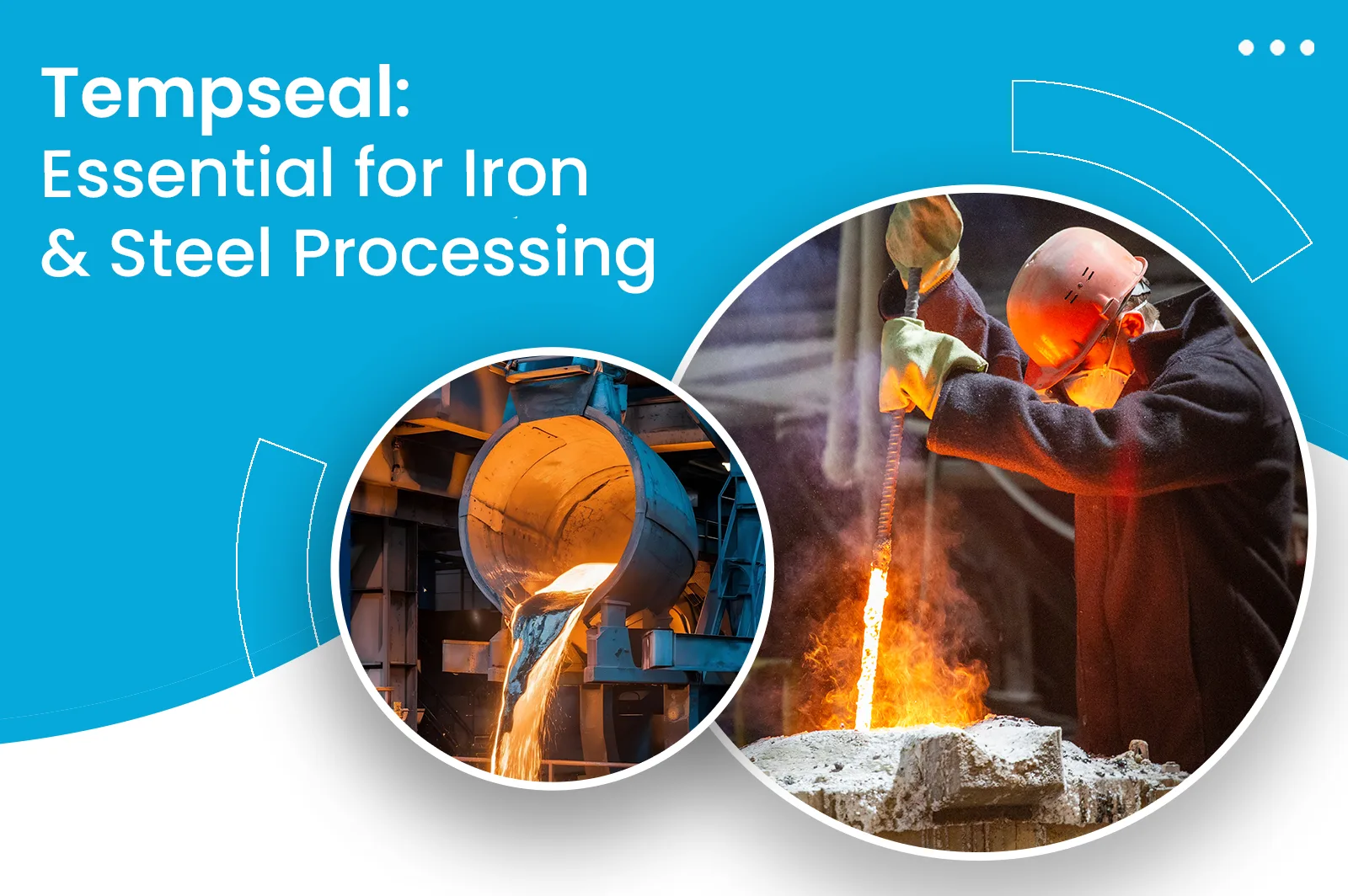
Thermal insulation coating for iron and steel processing improves energy efficiency, safety, and equipment life. Connect with info@novota.in. Steel manufacturing processes (melting iron ore, casting, rolling, or annealing.) revolve around heat. Many critical processes operate around 500°C. However, extreme heat always comes with challenges like energy loss, equipment degradation, and worker safety concerns.
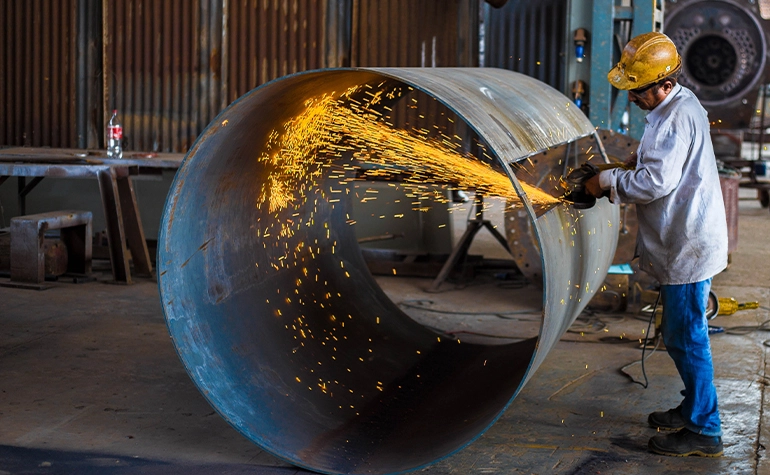
Studies show that heat losses in furnaces and kilns can account for up to 30% of energy consumption in steel plants. Hence, the thermal management process, such as thermal insulation coatings in India, is a must-have to make the best use of available heat in industries operating under extreme temperatures.
This blog explains thermal insulation and why it is necessary for heat-reliant industries. We also discuss how TempSeal, our advanced heat insulation coating, can be game-changing in these industries.
What is thermal insulation in iron and steel processing?
Thermal insulation uses materials and coatings that reduce heat transfer between objects or environments with varied temperatures. Insulation is essential in steel and iron processing, where extreme heat is a constant.
Thermal insulation traps the heat inside, reflects the radiant heat into the system, slows heat conduction, and maintains a higher internal temperature. This means less fuel consumption, less energy and more output.
There are many conventional methods of insulation, such as adding refractory bricks, ceramic fibre, or calcium silicate boards. For this blog, we are discussing a new-age solution- nano insulation coating- Tempseal.
What is Tempseal?
Tempseal is an advanced, high-temperature insulation coating solution designed for extreme industrial environments, such as steel manufacturing. This innovative heat insulation paint uses nano-sized particles to create a thin yet highly effective insulation.

Tempseal is engineered to endure harsh conditions in furnaces, kilns, rolling mills, and other high-heat applications.
Benefits of Tempseal:
- Improved energy efficiency,
- Better operational stability
- Safer operation
- Longer equipment lifespan,
- Lower maintenance costs
How Thermal Insulation Coating Helps Steel and Iron Processing:

1. Improving Energy Efficiency:
Insulation reduces unnecessary heat loss. This ensures that the heat generated is retained within the furnace and kiln, rather than lost to the surroundings. As a result, the furnaces operate at optimal temperatures without excessive fuel consumption.
2. Protecting Equipment:
Extreme heat, molten metal splashes, and mechanical stress accelerate wear and tear on critical steel plant components such as kiln linings, furnace doors, and exhaust systems. Tempseal acts as a protective barrier, reducing thermal strain on machinery and extending the lifespan of components by up to 40%.
3. Enhancing Worker Safety:
Steel plants rank among the most hazardous work environments, with high risks of burns, heat strokes, and fire accidents. A cross-sectional study conducted in Burnpur, West Bengal, revealed that approximately 28% of workers experienced accidents and injuries in the past year. Among these incidents, burns accounted for 19.01% of injuries. Tempseal improves insulation, reduces surface temperatures, and helps create safer working conditions, significantly lowering workplace hazards.
4. Minimising Downtime and Maintenance Costs:
Frequent furnace repairs and refractory replacements result in production downtime. This can cost steel manufacturers millions of rupees annually. Proper insulation reduces the frequency of refractory replacements and furnace shutdowns, improving plant uptime.
Real-World Applications: Where is Tempseal used in steel and iron processing?
Tempseal – a thermal insulation paint is highly effective in multiple areas of steel and iron processing, such as
- Blast Furnaces, Electric Arc Furnaces (EAFs), Reheating Furnaces, Annealing and Heat Treatment Furnaces: Tempseal prevents heat leaks, ensures efficient fuel usage, ensures uniform heat distribution and protects the furnace lining from damage
- Kilns and Boilers: Nano-insulation improves combustion efficiency, lowers fuel costs and ensures the equipment’s durability.
- Rolling Mills: Rolling mills require controlled temperatures to shape steel into sheets, bars, and beams, ensuring proper strength. Tempseal helps maintain heat levels and prevents rapid cooling, which could affect product quality.
Curious how to apply Tempseal? Check our social media post to learn more
Conclusion:
As Novota Thermotech’s innovative solution, Tempseal is an advanced insulation offering exceptional thermal protection at temperatures up to 500°C.
As a leader in thermal insulation coatings manufacturing in India, Novota Thermotech is committed to providing innovative coating solutions for industries facing extreme heat challenges, such as iron, steel, petrochemical, glass, etc.
Contact us today for more information on how Tempseal can transform your steel manufacturing process!. Subscribe
Frequently Asked Questions: Thermal Insulation Coating for Iron and Steel Processing
Steel plant engineers, maintenance heads, and operations managers frequently ask critical questions about thermal insulation coating for iron and steel processing. Below, we answer the most important technical and operational queries based on real-world plant conditions, engineering data, and field experience with Tempseal by Novota Thermotech.
1. What exactly is a thermal insulation coating for iron and steel processing, and how does it work at a molecular level?
A thermal insulation coating for iron and steel processing is a specially formulated surface-applied material designed to minimise heat transfer from high-temperature industrial equipment to the surrounding environment. Unlike bulk insulation materials such as refractory bricks or ceramic fibre blankets that rely on thickness for thermal resistance, advanced coatings like Tempseal leverage nano-particle technology to achieve superior insulation performance in a significantly thinner application layer.
At the molecular level, the coating works through three simultaneous heat transfer reduction mechanisms. First, the nano-sized ceramic and insulating particles embedded within the coating matrix reflect a substantial portion of infrared radiant heat back into the furnace or kiln cavity, preventing it from escaping through walls, doors, and structural joints. Second, the coating creates a low-thermal-conductivity barrier that dramatically slows conductive heat transfer through metal surfaces, refractory linings, and structural components. Third, the coating reduces convective heat loss by creating a stable surface layer that minimises the temperature gradient between the equipment exterior and the ambient air.
In practical engineering terms, this means that a properly applied thermal insulation coating for iron and steel processing can retain significantly more process heat within the system, directly reducing fuel input requirements while maintaining target operating temperatures. This is particularly critical in processes like radiant heat-dependent operations where even small thermal losses compound into massive energy waste over continuous production cycles.
2. Why should steel plants switch to nano insulation coating for steel plants instead of conventional refractory materials?
The shift toward nano insulation coating for steel plants is driven by clear engineering and economic advantages over conventional insulation methods. Traditional refractory bricks, ceramic fibre blankets, and calcium silicate boards have served the industry for decades, but they come with inherent limitations that modern steel operations can no longer afford to ignore.
Conventional refractories are bulky, heavy, and require extensive installation time, often necessitating complete furnace shutdowns lasting several days or even weeks. They are susceptible to thermal shock cracking under rapid temperature cycling, spalling from molten metal contact, and gradual degradation from chemical attack by slag and flue gases. Replacement frequency is high, and each replacement event triggers costly production downtime.
A nano insulation coating for steel plants like Tempseal addresses every one of these limitations. The coating is applied directly onto existing surfaces without dismantling equipment, reducing installation time from days to hours. Its nano-particle structure provides thermal resistance comparable to much thicker conventional insulation layers, saving valuable space inside furnace chambers and reducing dead load on structural supports. The coating bonds at the molecular level to substrates, resisting thermal shock, mechanical abrasion, and chemical degradation far more effectively than traditional materials.
From a lifecycle cost perspective, nano insulation coating for steel plants delivers a substantially lower total cost of ownership. Reduced installation labour, fewer replacement cycles, lower energy consumption, and minimised production downtime all contribute to a strong return on investment that typically pays for itself within the first year of application. For plant engineers managing tight maintenance budgets and demanding production schedules, this represents a significant operational advantage.
3. What temperature range can Tempseal withstand, and is it a reliable high temperature insulation coating up to 500°C?
Yes, Tempseal is engineered and validated as a high temperature insulation coating up to 500°C, making it suitable for a wide spectrum of iron and steel processing applications. The coating maintains its structural integrity, adhesion strength, and thermal performance across the entire operating range from ambient temperature through continuous exposure at 500°C.
This temperature capability covers the majority of external surface and intermediate-zone applications in steel plants. While the internal core of blast furnaces may reach temperatures exceeding 2000°C, the external shells, ducting, exhaust systems, boiler casings, rolling mill housings, and annealing furnace exteriors typically operate within the 200°C to 500°C range. These are precisely the surfaces where a high temperature insulation coating up to 500°C delivers maximum impact.
What makes Tempseal exceptional as a high temperature insulation coating up to 500°C is its thermal stability under real-world conditions. Steel plant environments are not just hot—they involve rapid temperature fluctuations during batch processing, mechanical vibrations from heavy machinery, exposure to corrosive flue gases, and intermittent contact with molten metal splashes. Tempseal’s nano-ceramic formulation is specifically designed to withstand all these simultaneous stresses without delamination, cracking, or performance degradation.
For applications requiring protection beyond 500°C, contact Novota Thermotech to discuss customised thermal management solutions engineered for your specific process requirements.
4. How is heat insulation paint for furnaces and kilns applied, and does it require furnace shutdown?
Applying heat insulation paint for furnaces and kilns is a straightforward process that experienced industrial coating teams can execute efficiently with minimal disruption to production schedules. The application process involves surface preparation, primer application where required, and coating application in controlled layers to achieve the specified dry film thickness.
Surface preparation is the most critical step in ensuring long-term coating performance. The target surface must be cleaned of loose rust, scale, dust, oil, grease, and any previously failed coatings. Depending on the substrate condition, preparation methods may include wire brushing, grinding, abrasive blasting, or chemical cleaning. The surface should be dry and free of moisture before application.
The heat insulation paint for furnaces and kilns can be applied using airless spray equipment, conventional spray guns, brushes, or rollers, depending on the surface geometry and accessibility. Airless spray application is preferred for large flat surfaces like furnace shells and boiler casings because it ensures uniform thickness and faster coverage. For complex geometries, joints, flanges, and hard-to-reach areas, brush or roller application provides better control.
Regarding furnace shutdown requirements, Tempseal application on external surfaces can often be performed during planned maintenance windows or even during partial operation when the surface temperature is within the coating’s application range. This is a major advantage over conventional refractory replacement, which invariably demands complete furnace shutdown, cool-down, demolition, reconstruction, and heat-up—a process that can consume one to three weeks of production time. Watch our application process on social media to understand the procedure visually.
The curing time depends on ambient conditions and coating thickness but typically ranges from 24 to 48 hours for full mechanical and thermal cure. Once cured, the heat insulation paint for furnaces and kilns forms a durable, resilient barrier ready for continuous high-temperature service.
5. How does an energy saving insulation solution for steel industry reduce operational costs?
An energy saving insulation solution for steel industry directly impacts the bottom line by addressing the single largest controllable cost in steel manufacturing—fuel and energy consumption. In a typical integrated steel plant, energy costs represent 25% to 40% of total production costs. When furnaces and kilns lose up to 30% of generated heat through poorly insulated surfaces, the financial impact is enormous.
Tempseal functions as a proven energy saving insulation solution for steel industry by creating a high-performance thermal barrier that retains process heat within the system. When heat stays where it belongs—inside the furnace—the combustion system requires less fuel to maintain target temperatures. This translates directly into reduced natural gas, coal, or electricity consumption per tonne of steel produced.
Beyond direct fuel savings, an effective energy saving insulation solution for steel industry generates cascading cost reductions across multiple operational areas. Lower surface temperatures reduce cooling water requirements for equipment protection. Reduced thermal cycling stress extends refractory and equipment life, cutting maintenance material and labour costs. Fewer unplanned shutdowns improve overall equipment effectiveness (OEE) and increase annual production tonnage without additional capital investment.
From a sustainability perspective, reduced fuel consumption directly lowers CO₂ emissions and helps steel plants meet increasingly stringent environmental regulations and carbon reduction targets. Many steel manufacturers in India are now under pressure from both regulatory bodies and international buyers to demonstrate measurable improvements in energy efficiency and carbon footprint—making an energy saving insulation solution for steel industry not just an operational improvement but a strategic business necessity.
6. What is the expected lifespan of thermal insulation coating for iron and steel processing?
The lifespan of a thermal insulation coating for iron and steel processing depends on several factors, including operating temperature, thermal cycling frequency, mechanical exposure, chemical environment, and the quality of initial surface preparation and application. Under typical steel plant operating conditions, a properly applied Tempseal coating delivers reliable performance for several years before requiring touch-up or recoating.
Compared to conventional refractory linings that may require partial or complete replacement every 6 to 18 months in aggressive service conditions, the extended service life of thermal insulation coating for iron and steel processing represents a substantial reduction in lifecycle maintenance costs. Additionally, when recoating is eventually required, the process is significantly faster and less expensive than refractory demolition and reconstruction, as the existing coating provides a sound base for overcoating.
Novota Thermotech recommends periodic thermal inspections using infrared thermography to monitor coating condition and identify any areas requiring maintenance attention before performance degradation occurs. This proactive approach maximises coating service life and ensures continuous thermal protection without unexpected failures.
7. Can nano insulation coating for steel plants be applied over existing refractory linings?
Yes, nano insulation coating for steel plants can be applied over existing refractory linings, provided the substrate is structurally sound and properly prepared. This is one of the most significant practical advantages of Tempseal over conventional insulation upgrades. Instead of demolishing and replacing existing refractories—a process that is expensive, time-consuming, and generates substantial waste—engineers can apply Tempseal directly over the existing lining to enhance its thermal performance.
The nano insulation coating for steel plants bonds effectively to a wide range of substrates including firebrick, castable refractory, ceramic fibre, metal shells, and previously coated surfaces. The key requirement is that the existing surface must be clean, dry, free of loose or spalling material, and structurally stable. Any damaged or deteriorated sections of the existing lining should be repaired before coating application.
This overlay capability makes Tempseal an ideal solution for upgrading thermal performance during scheduled maintenance shutdowns without the need for major capital expenditure on complete refractory replacement. It effectively extends the useful life of existing insulation systems while delivering measurable improvements in thermal efficiency.
8. Is high temperature insulation coating up to 500°C safe for workers during and after application?
Worker safety is a primary design consideration for any high temperature insulation coating up to 500°C, both during application and throughout its operational service life. Tempseal is formulated to meet industrial safety standards and is free from hazardous substances such as asbestos, lead, and volatile organic compounds (VOCs) that pose health risks to applicators and plant personnel.
During application, standard personal protective equipment (PPE) including respiratory protection, eye protection, gloves, and protective clothing should be worn as per the product’s safety data sheet (SDS). Adequate ventilation should be maintained in enclosed application areas. Once fully cured, the coating is chemically inert, mechanically stable, and does not release harmful fibres or particles under normal operating conditions.
After application, the high temperature insulation coating up to 500°C significantly enhances ongoing worker safety by reducing external surface temperatures on furnaces, kilns, boilers, and piping systems. As documented in occupational health studies from Indian steel plants, burns account for nearly 19% of all workplace injuries. By lowering surface temperatures to safe-touch levels, Tempseal directly reduces the risk of contact burns, heat-related illnesses, and thermal radiation exposure for workers operating in proximity to hot equipment.
9. Where can heat insulation paint for furnaces and kilns be applied within a steel plant?
Heat insulation paint for furnaces and kilns has versatile application potential across virtually every heat-intensive area within a steel plant. The primary application zones include blast furnace shells and tuyere areas, electric arc furnace (EAF) panels and roofs, reheating furnace walls and doors, annealing furnace chambers, coke oven batteries, and lime kilns.
Beyond furnaces and kilns, heat insulation paint for furnaces and kilns technology extends to boiler shells and steam drums, hot gas ducting and exhaust stacks, rolling mill housings and run-out tables, ladle and tundish exteriors, torpedo car shells, and hot metal transfer equipment. Each of these surfaces represents a heat loss point that, when properly insulated, contributes to overall plant energy efficiency.
The versatility of Tempseal as a heat insulation paint for furnaces and kilns means that plant engineers can implement a comprehensive thermal management strategy across the entire facility rather than addressing individual equipment in isolation. This whole-plant approach maximises cumulative energy savings and creates uniformly safer working conditions throughout the production chain.
10. How does an energy saving insulation solution for steel industry contribute to environmental compliance?
An energy saving insulation solution for steel industry plays a direct and measurable role in helping steel manufacturers meet environmental compliance requirements. The steel industry is one of the largest industrial sources of carbon dioxide emissions globally, and regulatory pressure to reduce emissions is intensifying across India and international markets.
When Tempseal reduces heat loss from furnaces, kilns, and boilers, the immediate result is lower fuel consumption. Lower fuel consumption means proportionally lower CO₂, NOx, SOx, and particulate matter emissions from combustion processes. For steel plants operating under emission caps, pollution control board requirements, or voluntary sustainability commitments, these reductions can be the difference between compliance and costly penalties.
Additionally, an effective energy saving insulation solution for steel industry supports compliance with Bureau of Energy Efficiency (BEE) norms under the Perform, Achieve and Trade (PAT) scheme, which mandates specific energy consumption targets for designated industrial consumers. Steel plants that achieve energy savings beyond their PAT targets earn tradeable energy saving certificates (ESCerts), creating an additional revenue stream.
As a leading thermal insulation coatings manufacturer in India, Novota Thermotech helps steel plants not only reduce operational costs but also strengthen their environmental credentials and market competitiveness through proven energy saving insulation technology.
11. How can I get Tempseal for my steel plant, and does Novota Thermotech provide technical support?
Getting Tempseal for your steel plant is straightforward. Contact Novota Thermotech directly to discuss your specific requirements, operating conditions, and application areas. The technical team at Novota Thermotech conducts detailed assessments of your plant’s thermal profile, identifies the highest-impact insulation opportunities, and recommends the optimal coating specification and coverage plan.
Novota Thermotech provides end-to-end technical support including site surveys, thermal audits, surface preparation guidance, application supervision, quality inspection, and post-application performance monitoring. Whether you are insulating a single reheating furnace or implementing a plant-wide thermal insulation coating for iron and steel processing programme, the team ensures that every application delivers maximum thermal performance and long-term durability.
As a committed thermal insulation coatings manufacturer in India, Novota Thermotech serves industries including iron and steel, petrochemical, glass, cement, and power generation. Subscribe to our YouTube channel for technical videos, application demonstrations, and industry insights.