
Advanced Ceramic Coating for Extreme Temperature Protection

Introducing emiSEAL

One-of-a-kind coating developed and researched in India

About emiSEAL

emiSeal is a high-emissivity ceramic coating which radiates heat incident on refractory walls of furnaces back onto the load in the furnace. The coating enhances the thermal efficiency of the furnace, resulting in fuel savings.

emiSeal is engineered to protect refractory linings in extremely high-temperature environments, up to 1200°C., this inorganic binder-based coating system ensures both longevity and thermal efficiency.

emiSeal lowers the residual heat in the refractory walls and results in reducing thermal shock. This significantly enhances the performance and durability of refractory linings, and helps reduce downtime.

Download Our Brochure

4.82MB

emiSEAL – High Emissivity Ceramic Coating for Energy-Efficient Furnaces

What Is emiSEAL?

emiSEAL is a high emissivity ceramic coating designed for high-temperature industrial furnaces. Instead of allowing refractory walls to absorb heat, the coating reflects and radiates heat back into the furnace chamber.

This solution works as an energy-saving refractory coating by improving radiant heat transfer efficiency.

Operating temperature capability: Up to 1200°C

How Does This Energy Saving Refractory Coating Work?

Absorbs heat from flame and hot gases
Re-emits infrared radiation back to the load
Reduces heat loss through refractory lining
Improves heat transfer efficiency inside the furnace
Result
  • Faster heating cycles
  • Reduced fuel consumption
  • Uniform temperature distribution

Why Is High Emissivity Ceramic Coating Important in Furnaces?

Conventional refractory materials absorb heat, which leads to energy loss and inefficient furnace operation.

A high emissivity refractory coating improves furnace performance by:

  • Increasing emissivity of furnace walls
  • Improving radiant heat exchange
  • Reducing thermal gradients
Typical Furnace Applications
  • Reheating furnaces
  • Forging furnaces
  • Rolling mills
  • Ceramic kilns

What Makes This a High Emissivity Refractory Coating?

Inorganic binder system ensures high thermal stability
Optimized emissivity factor for maximum radiation
Strong adhesion with refractory surfaces
Resistant to oxidation and thermal cycling

What Are the Benefits of This Coating?

⚙️ Performance Benefits

  • Enhances furnace thermal efficiency
  • Reduces heat loss through walls
  • Improves process consistency
  • Ensures uniform heat distribution

💰 Cost Benefits

  • Lowers fuel consumption
  • Reduces maintenance frequency
  • Extends refractory life
  • Minimizes downtime

🌿 Environmental Benefits

  • Reduces carbon emissions
  • Supports energy-efficient operations
  • Contributes to sustainable manufacturing

How Does It Act as an Energy-Saving Refractory Coating?

Reflects unused heat back into the process zone
Minimizes heat absorption by refractory bricks
Reduces burner load requirement
Improves fuel-to-output ratio
Industry Reports: Energy savings between 5% and 20% depending on furnace application.

Where Is High Emissivity Coating for Furnaces Used?

🏭 Steel Industry

Applications
  • Reheating furnaces
  • Ladle preheaters
  • Billet heating furnaces
Benefits
  • Uniform billet heating
  • Reduced scaling
  • Lower fuel cost

🏗️ Cement Industry

Applications
  • Rotary kilns
  • Calcination units
Benefits
  • Stable temperature profile
  • Reduced heat loss
  • Improved clinker quality

🏺 Ceramic Industry

Applications
  • Kilns
  • Shuttle kilns
  • Tunnel kilns
Benefits
  • Uniform firing
  • Reduced rejection rate
  • Improved product finish

⚡ Power Plants

Applications
  • Boilers
  • Combustion chambers
Benefits
  • Improved combustion efficiency
  • Reduced fuel usage
  • Better heat transfer

🔩 Aluminium & Non-Ferrous

Applications
  • Melting furnaces
  • Holding furnaces
Benefits
  • Faster melting
  • Reduced oxidation losses
  • Improved thermal efficiency

Frequently Asked Questions

Yes. By reflecting heat back into the furnace chamber, it reduces heat loss through refractory walls and improves overall thermal efficiency. Industrial case studies consistently demonstrate fuel savings between 5% and 20%, depending on furnace type, operating temperature, and existing insulation condition. The coating essentially converts wasted absorbed heat into useful radiant energy directed toward the workload.
Yes. The coating can be applied on existing refractory linings and is commonly used for retrofitting furnaces to improve energy efficiency. There is no need to replace or rebuild the refractory structure. As long as the existing lining is structurally sound and free from loose material, emiSEAL can be applied directly, making it a highly cost-effective upgrade for aging furnace installations.
Service life depends on operating conditions such as temperature, atmosphere, and thermal cycling frequency. Under typical industrial conditions, the coating lasts between 2 to 5 years before reapplication is needed. It significantly extends refractory lifespan by acting as a protective barrier against thermal shock, oxidation, and slag attack, reducing wear on the underlying refractory material.
Yes, it is compatible with most industrial furnace types including fuel-fired furnaces, electric furnaces, kilns, and ovens. The coating works equally well on gas-fired, oil-fired, and solid-fuel systems. It is also suitable for both batch and continuous furnace operations across steel, cement, ceramic, glass, aluminium, and power generation industries.
emiSEAL is engineered to achieve an emissivity value of 0.90 or higher across its full operating temperature range. Standard refractory materials typically have emissivity values between 0.30 and 0.70, meaning a significant portion of thermal energy is not effectively radiated back into the furnace chamber. By raising the surface emissivity to 0.90 and above, emiSEAL ensures that maximum infrared radiation is directed toward the furnace load, resulting in measurably better heat utilization and substantial energy savings.
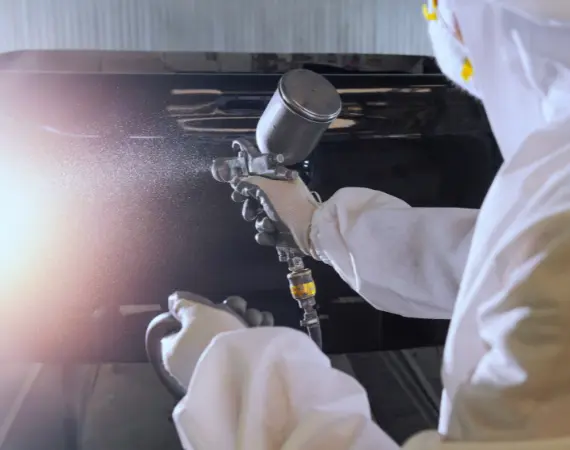
emiSEAL is applied using standard industrial methods such as spraying, brushing, or roller application directly onto the refractory lining surface. Before application, the surface should be clean and free from loose debris, dust, or oil contamination. The coating is typically applied in two to three thin layers, with each layer allowed to dry before the next is applied. Final curing takes place during the initial furnace heat-up cycle, forming a strong and durable ceramic bond with the refractory substrate.
Most industrial users report a return on investment within 3 to 8 months of application, depending on furnace size, operating temperature, and fuel type used. The energy savings achieved through improved radiant heat transfer directly reduce monthly fuel bills. When combined with lower maintenance costs, fewer unplanned shutdowns, and extended refractory service life, the total cost benefit makes emiSEAL one of the most cost-effective energy-saving solutions available for high-temperature industrial furnace operations.
No extensive or specialized surface preparation is required. The refractory surface should be dry, structurally intact, and free from loose particles, oil, or chemical residues. For best adhesion results, lightly cleaning the surface with compressed air or wire brushing is recommended. emiSEAL bonds effectively with most commonly used refractory materials including firebricks, castables, ceramic fiber linings, and insulating boards, making it highly versatile for various furnace configurations.
Yes, emiSEAL application is typically carried out during scheduled maintenance shutdowns. The coating process is quick and does not require specialized equipment or highly trained applicators. Depending on the furnace size and surface area, the full application can be completed within a few hours to a couple of days. Once applied, the coating cures naturally during the normal furnace startup heating cycle, so no additional downtime is needed exclusively for curing.
Yes, emiSEAL is an inorganic, water-based ceramic coating that does not release harmful volatile organic compounds during application or high-temperature operation. By significantly reducing fuel consumption in industrial furnaces, it also directly contributes to lower carbon dioxide and greenhouse gas emissions per unit of production. This makes emiSEAL an environmentally responsible choice for industries aiming to meet sustainability targets, comply with emission regulations, and reduce their overall carbon footprint.

Innovators of Advanced Heat Management Coatings

Novota, an industry leader in the manufacturing & supply of functional coatings, is globally recognized for its custom-engineered solutions in heat management. Their dedication to innovation is evident in their development of energy-efficient, high-emissivity refractory coatings.

Features

Withstands up to 1200°C

Emits heat back

Offers long-lasting protection

Easy to apply

Uniform heat distribution

Promotes effective energy conservation
Benefits

01

Ready-to-apply coating

02

Achieves optimal thermal performance

03

Extends lifespan

04

Reduces operational downtime

05

Reduces maintenance costs

06

Leads to lower energy consumption

07

Minimizes the risk of thermal damage

08

Contributes to a lower carbon footprint

Applications

Furnaces

Combustion Chambers

Kilns

Ovens

Protect your refractory linings with emiSEAL

FAQs

What is the typical durability of our high emissivity coating?

Sed rhoncus facilisis purus, at accumsan simply free text available purus sagittis vitae. Nullam acelit at eros imperdiet. Pellentesque sit.

Are there any safety considerations or precautions when applying high-emissivity coatings?

Sed rhoncus facilisis purus, at accumsan simply free text available purus sagittis vitae. Nullam acelit at eros imperdiet. Pellentesque sit.

How does high emissivity coating contribute to sustainability?

Sed rhoncus facilisis purus, at accumsan simply free text available purus sagittis vitae. Nullam acelit at eros imperdiet. Pellentesque sit.

Are there any environmental considerations associated with high emissivity coatings?

Sed rhoncus facilisis purus, at accumsan simply free text available purus sagittis vitae. Nullam acelit at eros imperdiet. Pellentesque sit.

Does this coating require re-application?

Sed rhoncus facilisis purus, at accumsan simply free text available purus sagittis vitae. Nullam acelit at eros imperdiet. Pellentesque sit.

Download Brochure