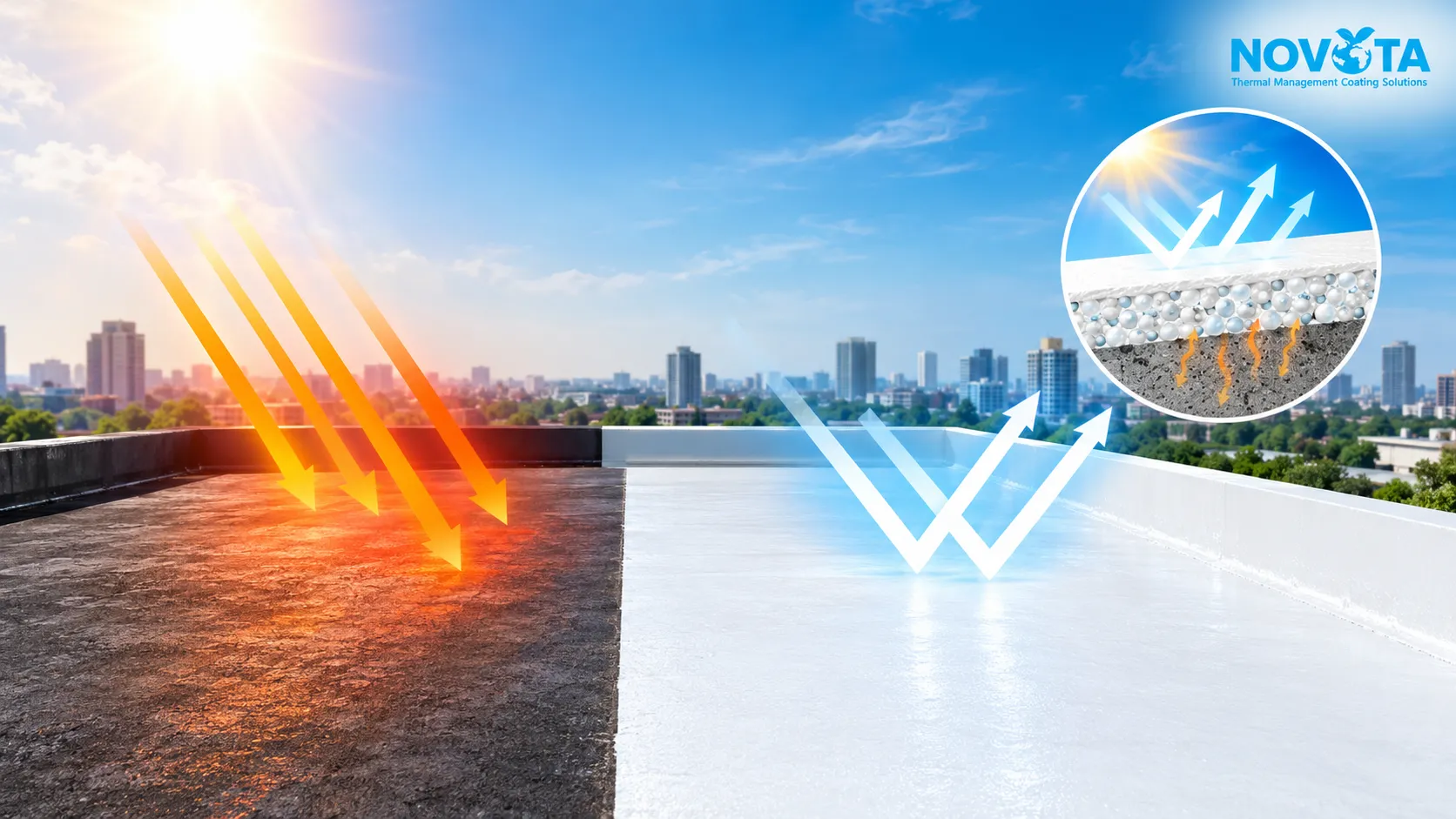


Protecting our homes from natural issues such as harsh sunlight or rain is a constant struggle, especially in India. These environmental factors affect the structural integrity and durability of the home, as well as the comfort of people inside.
While numerous post-treatment fixes exist, the real impact comes from pre-treatment, especially when it comes to controlling heat. Heat reflective coating is a smart and effective option for heat control. But what exactly is this? In this blog, we will offer insights on how this paint can transform your house into a cooler, more efficient, and more durable space.
What is heat reflective paint?
Roof and walls often absorb heat from the sun. This makes the roof hotter than the indoor air. The heat moves from the hotter area to the cooler one. Hence, the temperature inside the home also increases significantly.
Heat reflective paints are specialised radiant heat barrier coatings designed to reflect the sun’s heat rather than allowing it to be absorbed. As a result, the transfer of heat into a structure also reduces. Thereby reducing the surface temperature inside the home.
How Do Heat Reflective Coatings Work?
Heat reflective coatings are a radiant heat barrier coating. They use physics and material science to manage solar heat gain and reduce temperature build-up on exposed surfaces. They alter the optical properties (how the sunlight behaves when interacting with the surface) and thermal properties ( how the surface behaves when interacting with the sunlight).
Optical properties that are altered include:
- Reflectance: The amount of sunlight that is bounced back from the surface
- Absorptance: The amount of sunlight the surface absorbs
Thermal properties that are altered include:
- Emittance: Surface ability to release the absorbed heat back into the air
These paints are also called heat control roof paint. They are engineered to reflect most incident sunlight and release any absorbed heat quickly. This reduces the overall heat gain of the surface.
Heat Reflective Coatings vs Heat Insulation Coatings for Roof
Heat Reflective coatings often have low thermal conductivity compared to roof, giving some insulation effect. However, it is very different from heat insulation coating or paint.
On roofs, reflective coatings work better because they stop heat at the source. Insulation coatings affect only after the roof heats up.

Benefits of Heat Reflective Coatings:
1. Reduced Surface and Indoor Temperatures
By reflecting heat, these coatings can lower roof temperatures by 10–20°C. This results in noticeably cooler indoor conditions, even during peak summer heat.
2. Energy Savings
Heat-reflective coatings are renowned as energy-saving coatings. Lowering indoor temperatures reduces the load on air conditioning, HVAC and cooling systems. This directly reduces energy consumption and electricity bills.
3. Extended Roof Lifespan
Thermal stress is a common cause of surface wear and tear. Reflecting sunlight, particularly UV rays, prevents surface damage. This improves surface life
4. Eco-friendly:
Innovative reflective coatings are often formulated with low-VOC (volatile organic compound) materials. This significantly reduces air pollution and the building’s carbon footprint.
5. Quick ROI:
Applying these energy-saving coatings doesn’t require major changes in the structure. Many heat-reflective paint manufacturers recommend surface preparation before application. However, it’s not a huge cost, and the savings after applying this coating often begin immediately.
Read More: Top 7 benefits of heat-reflective paint
Besides this, heat reflective paint can also improve employee well-being by creating a more comfortable working environment.
Common Applications
- Homes, hospitals, offices & schools: Especially homes with flat roofs in hot climates.
- Factories & warehouses: To control temperature without costly HVAC systems.
- Tanks and pipelines: Prevent dangerous rises in temperature when storing chemicals or sensitive materials.
- Roads: Help combat urban heat islands by cooling paved city surfaces.
How to Apply Novota Heat Reflective Paint
Before applying these coatings, the surface needs to be prepared by cleaning the surface thoroughly and creating an even surface. Then one or more coats can be applied using a brush, roller, or spray as recommended by the experts.
Sunsheetal – Heat reflective coatings
Sunsheetal has a high-performance heat-reflective coating. It has the highest solar reflective index in India at 108. Considering the temperature in India and rising dependence on AC, sunshades can reduce the indoor temperature by 6-10°C.
If you’re still unsure whether this coating is right for your needs, take a moment to assess your building requirements. As a cool roof paint manufacturer based in India, we recommend selecting it after assessing your climate, roof type, budget and energy consumption patterns.
Conclusion:
Heat reflective coating is a smart step to reduce indoor temperature. Considering the paradigm shift in the practice of saving energy, these coatings are often recommended along with passive design elements like ventilation, insulation, and smart layout.
Novota is India’s only manufacturer of heat-reflective paint (Sunsheetal) with a 108 reflective index. Sunsheetal is trusted by 250+ green buildings. Contact us today to learn more about Sunsheetal.
FAQs:
Does it work in humid or coastal regions?
Is solar reflective paint worth the cost?
Yes, definitely. Considering the energy savings and cut in monthly energy bills, it is worth the cost.
Does solar reflective paint reduce heat?
Yes, solar reflective paint reduces surface temperature as well as temperature inside.
Is there any maintenance needed for Sunsheetal during the monsoon?
It is recommended to check for water pooling or algae formation on the roof during monsoon.
Can heat-reflective coating be applied on old, cracked roofs?
Yes, coatings can be applied on a cracked or old roof. However, surface preparation is recommended.